Our approach to learning: Building skills through play
An unfamiliar route, a beam of light, a relay waiting to be activated: in Ludinautes, adventure gives learning a purpose within the world. Discover how exploration, carefully designed challenges and cooperation shape a game built to engage the skills children use to learn.
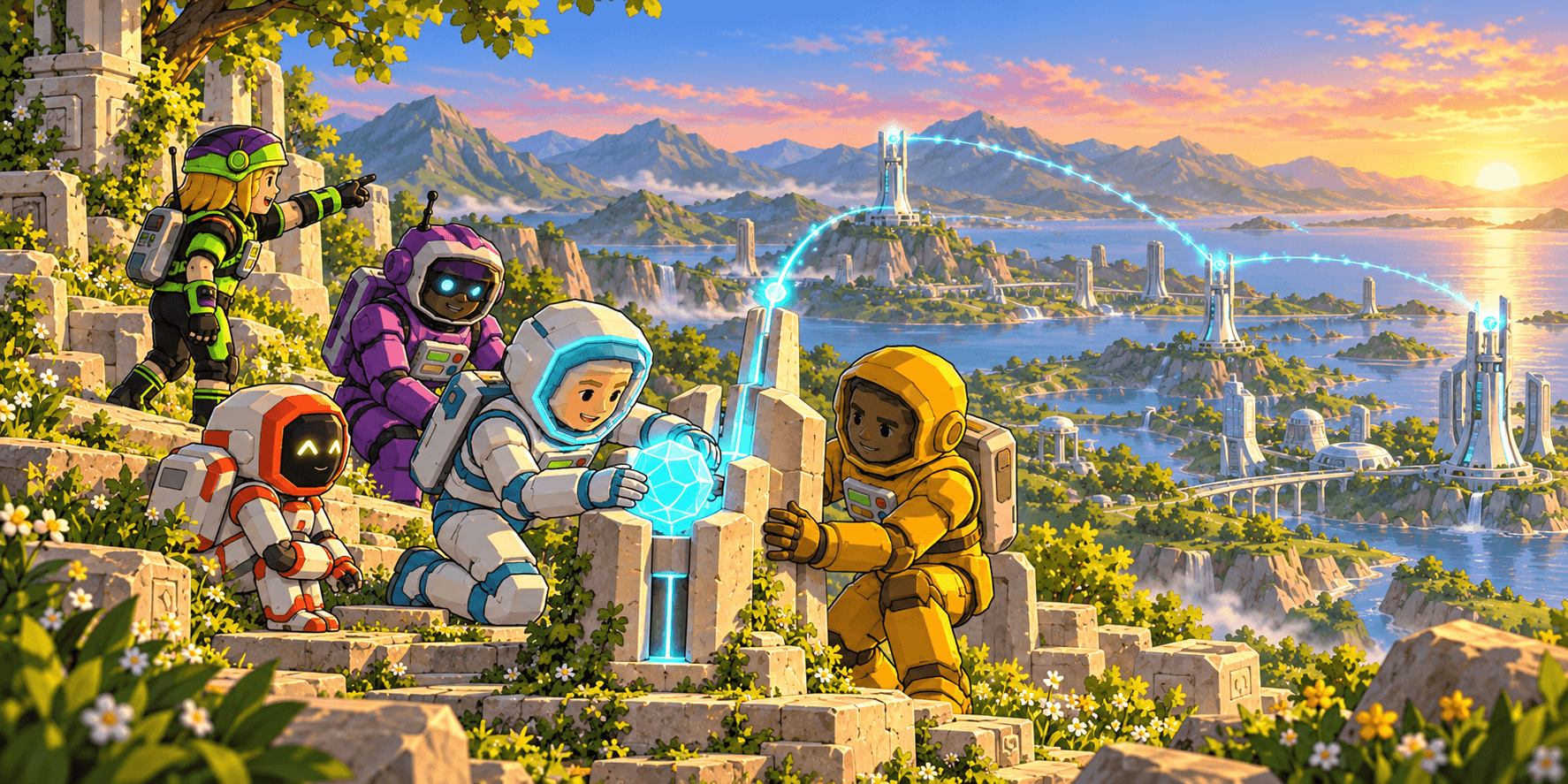
A world to explore, a mission to complete
Beyond the next ridge, a relay is waiting. Reaching it means finding a route, understanding what blocks the way and deciding what to try. The destination matters, but so does everything that happens before the light comes on.
This is the central idea behind Ludinautes: a video game with an educational purpose. Its adventures begin with a world worth exploring, rather than a worksheet waiting for a fictional reward. Children are already Ludinautes — travellers of knowledge — with a role to inhabit and a mission to carry forward.
One of their objectives is to install and activate relays across the world, extending Ludenta, the network of knowledge. Within this fictional universe, each node connects a place to a wider network through which knowledge can travel, be shared and grow. A newly activated relay makes a local achievement part of something larger.
That purpose gives the journey its coherence. A passage to unlock or a route to remember belongs to the adventure. The educational intention is woven into what players need to notice, understand and do to move forward.
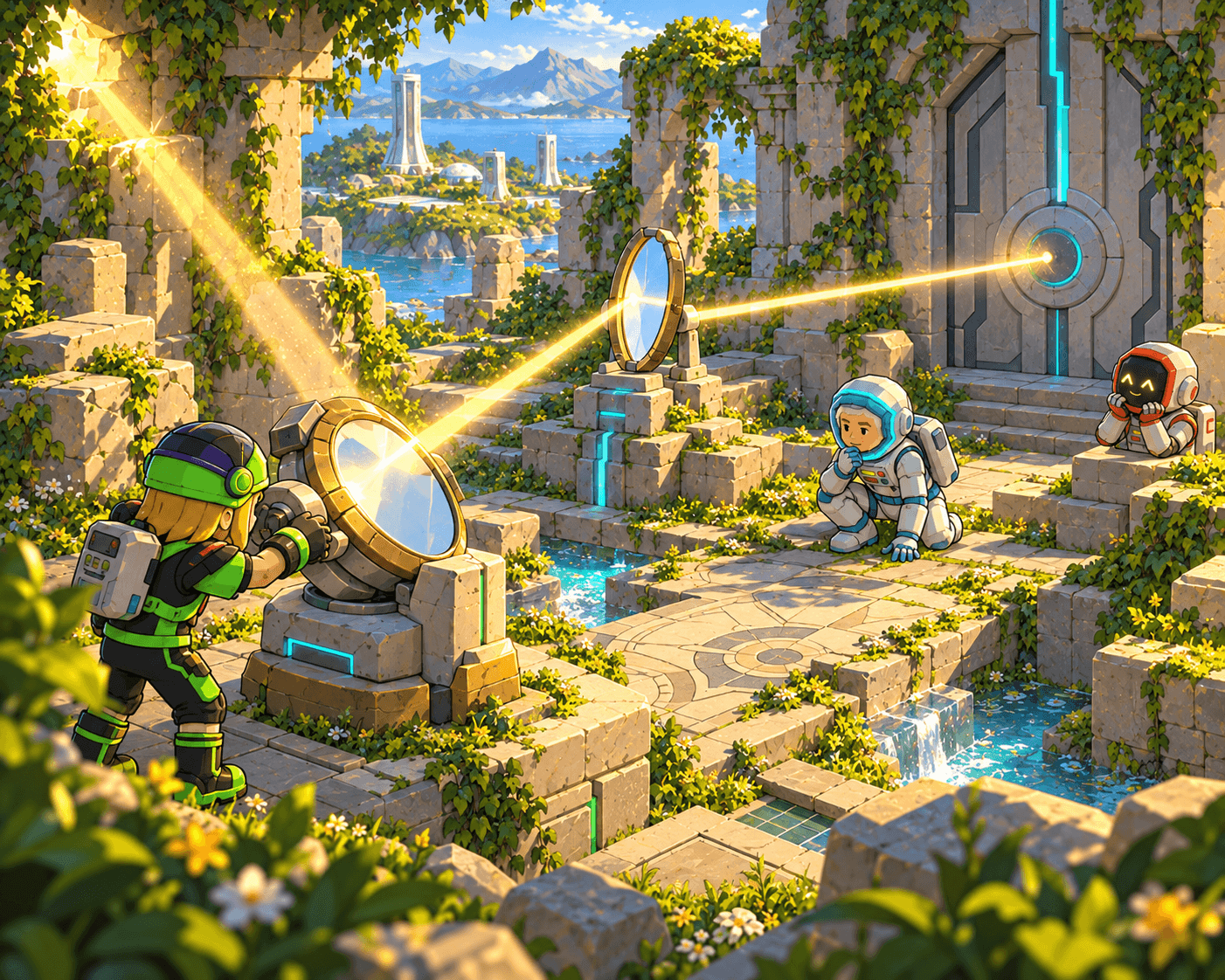
Challenges that engage essential skills
Consider a chamber where light must reach a receiver to open a passage. A player rotates a mirror, watches the beam move and tries another angle. Solving the puzzle calls on observation, logic and spatial reasoning: what changed, where did the light go, and what might happen next?
Other situations engage different processes. Remembering a route or a sequence of landmarks draws on memory. Recognizing a symbol among similar shapes involves visual attention and discrimination. Navigating obstacles calls on visuospatial awareness; timing jumps between moving platforms brings coordination and the rhythm of movement into play.
These are examples of the gameplay situations guiding Ludinautes' design. The challenge should make sense on the player's own terms: reach the other side, understand the mechanism, find the next relay. Choices, retries and changes of strategy belong to that experience. Feedback from the world gives players something concrete to reconsider.
There is an important distinction here. Calling on memory during a game does not, by itself, demonstrate a lasting improvement in memory or school learning. Ludinautes is designed to create opportunities to exercise these processes. Establishing whether those opportunities produce measurable educational benefits requires evidence beyond completing a challenge.
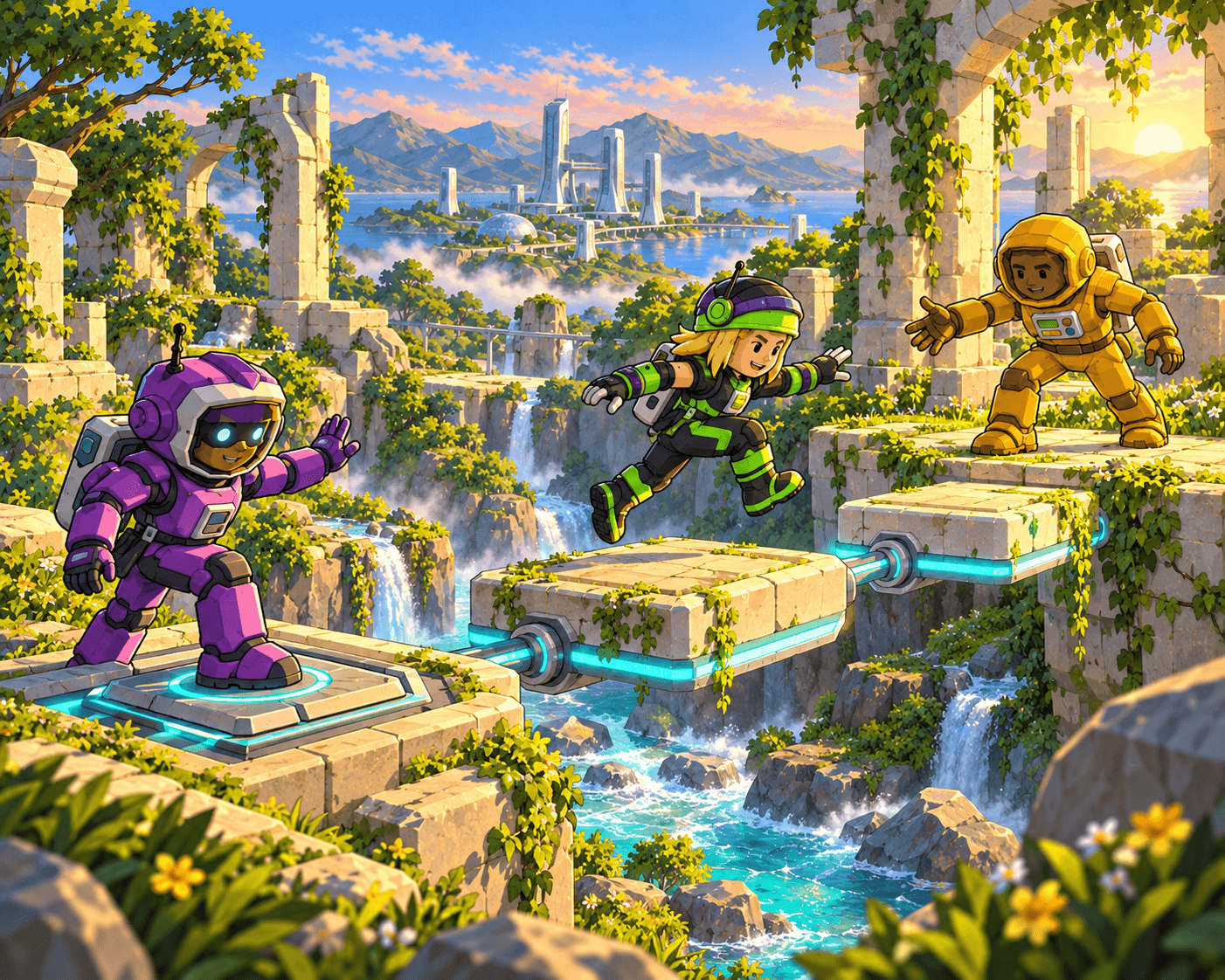
Adventures are better together
A moving platform becomes a different challenge when reaching the far side depends on someone else. One explorer keeps a mechanism active, another watches the timing, and a third prepares to cross. Success depends on understanding how those actions fit together.
This is the kind of shared exploration Ludinautes seeks to make possible through multiplayer experiences. Cooperation gives players reasons to explain an idea, listen to another approach and adjust a plan together. Someone may notice a pattern first; someone else may find a clearer way to describe it. Different contributions can help an adventure move forward.
Mistakes have a place in that process. A mistimed jump or an unsuccessful attempt can prompt a useful conversation: did we act too soon, overlook a clue or misunderstand the mechanism? Retrying becomes a chance to test a revised idea.
Designing for cooperation also means making room for participation. The intention is to create challenges in which contributing matters, without reducing every player to the same task or pace. A shared discovery can be satisfying because of the discussion, uncertainty and small adjustments that brought the group there.
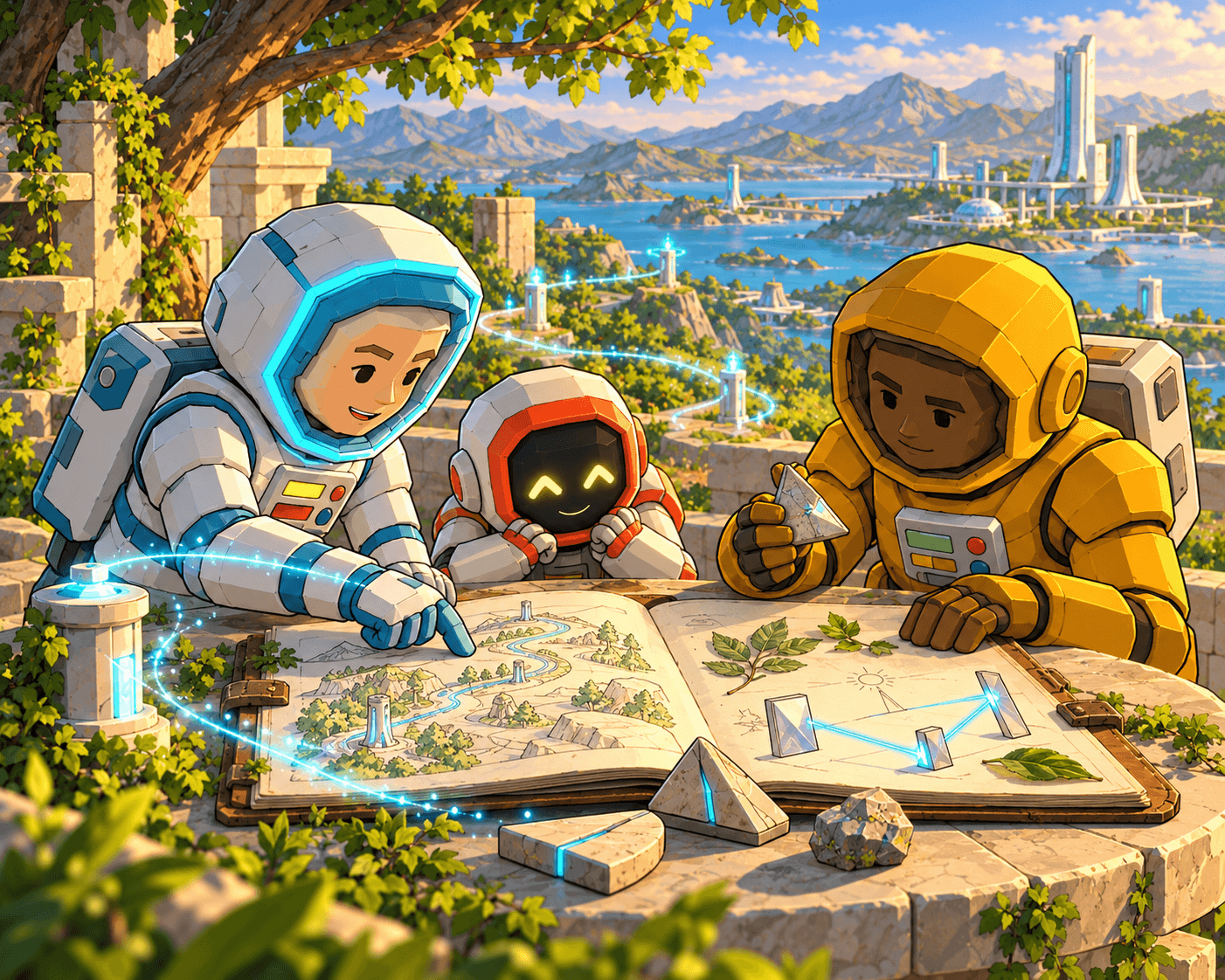
Beyond the game: A wider learning journey
The child's adventure is one part of a wider educational ambition. Ludinautes also aims to connect gameplay with a workspace for parents, teachers, researchers and other authorized participants, where observations might eventually support a more informed understanding of learning needs.
Today, the application is experimental and data collection is underway. Advanced analytics, automated AI recommendations, personalized remediation and fully individualized learning pathways are future ambitions; they are not operational capabilities of the current application.
The longer-term vision is to interpret gameplay observations through meaningful progress indicators, explore possible needs and suggest appropriate educational activities. That could include printable pedagogical activities, connecting an experience on screen with discussion or practice away from it.
Making those connections responsibly requires context. A pause may mean reflection, distraction or difficulty understanding a control. A retry alone cannot explain why something was hard. Useful interpretation will need to account for such differences, alongside the knowledge adults bring about each child.
The ambition is to build a thoughtful connection between play and educational support while preserving the adventure's own value. For the player, there is still a world to explore, a problem worth solving and another relay waiting to join the network.